How Long Do Cast Iron Sewer Pipes Last in Florida?
How long does cast iron sewer pipe last in Florida? Lifespan factors for Naples homes, why under-slab lines fail faster, and when to replace.
Cast iron sewer pipes typically last 50 to 75 years in ideal conditions, but Florida's corrosive soil, high water table, and under-slab installations shorten that considerably. In Naples, many cast iron lines installed in the 1960s and earlier are already past their reliable years, and failures cluster in pre-1972 homes. This guide covers what determines your pipe's lifespan, how to read the signs of decline, and when replacement beats another repair.
Cast iron sewer pipe lifespan is the number of years a cast iron drain line keeps working before corrosion, cracking, or collapse forces repair or replacement. It is not a fixed expiration date. Two identical pipes can live very different lives depending on soil, water, and what flows through them.
How long do cast iron sewer pipes last in Florida?
As a general industry rule of thumb, cast iron drain pipe lasts 50 to 75 years in favorable conditions: stable soil, good drainage, and moderate use. Florida conditions are rarely favorable. The general experience among plumbers working in this state is that under-slab cast iron in corrosive soil and a high water table often gives out well before the 75-year mark, with many Naples lines failing somewhere in the 40 to 60 year range.
Do the math on a typical Naples home. A house built in 1965 has a sewer line that is about 61 years old in 2026. That puts it squarely in the failure window for Florida conditions. A house built in 1985, past the cast iron era, likely has PVC and a much longer road ahead. The build year is the single fastest way to estimate where your line stands.
The important nuance: age is a risk factor, not a verdict. Plenty of 60-year-old cast iron lines are still working, and some 45-year-old ones have already collapsed. Age tells you to look. Only a camera inspection, typically $189 to $349, tells you what is actually there.
What shortens a cast iron pipe's life in Florida
Soil chemistry is the biggest factor. Florida soils in the Naples area tend to be moist, warm, and corrosive, and corrosive soil attacks cast iron from the outside while wastewater gases work on it from the inside. A pipe fighting corrosion on both surfaces loses wall thickness twice as fast as one fighting it on one.
The water table comes next. In much of Collier County the water table sits high, which means buried pipe spends much of the year wet or submerged. Constant moisture keeps corrosion active year-round instead of cycling with the seasons. Lines in well-drained, higher ground consistently outlast identical lines in low, wet areas.
Soil movement is the third factor. From roughly June through November, rain-saturated soil swells, shifts, and settles. Each cycle flexes joints and stresses pipe walls that are already thinned by corrosion. Over decades, those cycles add up to separated joints and cracked sections.
What goes down the drain matters too. Harsh chemical drain cleaners accelerate corrosion on old iron. Grease coats the interior and traps moisture against the metal. Garbage disposals add ground food waste that feeds bacterial corrosion. None of these kills a pipe in a year, but over thirty years they take their toll.
Under-slab vs yard lines: why location matters
Where the pipe runs changes everything. Yard lines sit in soil that breathes, drains, and can be dug up for inspection or repair. Under-slab lines sit in a far harsher environment: trapped moisture, no drainage, constant contact with damp concrete and soil, and no way to inspect without breaking the floor.
Under-slab lines also fail more dangerously. A yard line that cracks leaks into soil. An under-slab line that cracks leaks under your home, where you cannot see it until the symptoms show up inside. By the time an under-slab failure announces itself with backups or odors, the damage is usually advanced.
This is why the pre-1972 distinction matters so much in Naples. Homes from that era typically have cast iron running under the slab, combining the most failure-prone material with the harshest location. When we scope sewer line repair in East Naples, where many homes date to exactly this era, the under-slab question shapes every recommendation.
How much life is left, and when to replace
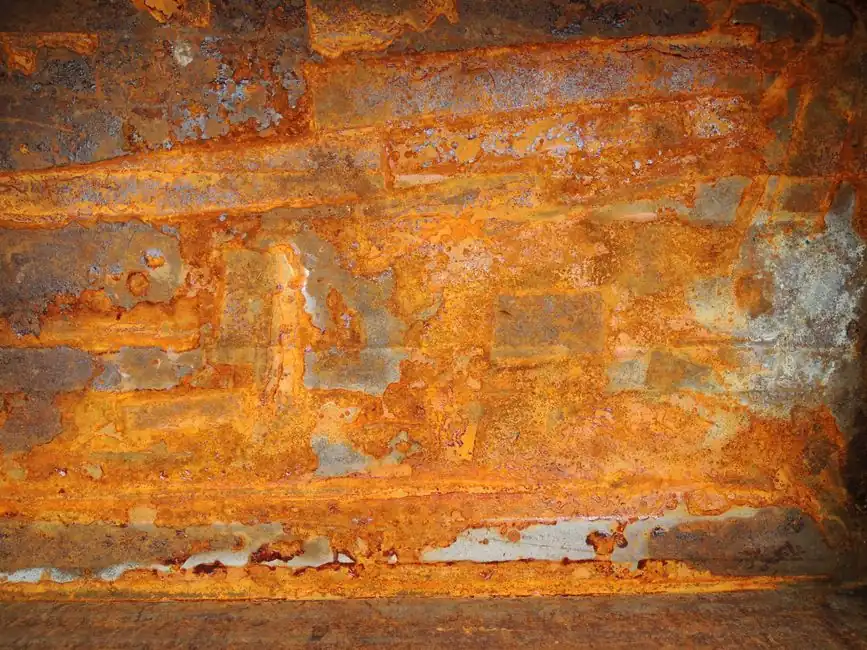
The honest way to answer this is footage, not arithmetic. A camera inspection shows the actual condition: surface rust versus deep pitting, isolated cracks versus widespread failure, sound joints versus separated ones. A 60-year-old line with light scale has years left. A 45-year-old line with heavy pitting and multiple cracks does not.
Watch for the progression of symptoms. Occasional slow drains mean the line is declining. Slow drains across multiple fixtures mean the decline is advanced. Repeated backups mean the line is failing now. Each stage narrows your options: early stages leave room for spot repair or lining, while late stages often leave only replacement.
When the camera shows widespread deterioration, planned replacement beats emergency replacement on every measure. Planned work lets you choose trenchless methods, schedule around your life, and compare quotes calmly. Emergency work after a collapse usually means digging, premium pricing, and whatever schedule the crisis allows. A Sewer Line Replacement in Naples done on your timeline costs less in money and disruption than the same job done on the pipe's timeline.
There is also a middle path worth knowing. When part of the line is failing and the rest is sound, a spot repair, typically $600 to $2,500, can buy meaningful years. The camera tells you whether you are buying years or just buying time.
Common mistakes in judging pipe lifespan
The most common mistake is assuming the pipe is fine because the drains work today. Cast iron fails gradually, then suddenly. The line that drains fine in March can back up in August after rain season stresses it. Current function is not a forecast.
The second mistake is the opposite: assuming a 60-year-old line must be replaced immediately. Age alone does not condemn a pipe. We have camera footage of 60-year-old lines with decades of life left, and replacing those early wastes money. Inspect first, decide second.
The third mistake is comparing your line to a neighbor's. Same street, same builder, same year, and the lines can be in completely different condition. Soil varies lot to lot, water tables vary, and one homeowner's grease habit is not another's. Your pipe's condition is its own data point.
The fourth is ignoring the yard. If you are weighing sewer line repair in Golden Gate or anywhere else and the lawn shows a lush stripe or soggy patch over the pipe run, the line is already leaking. That is not a lifespan question anymore. That is a repair question.
When to call a professional
Call for a camera inspection when your home was built before 1972 and you have never seen inside the line, when any two failure symptoms appear together, or when you are buying, selling, or renovating and want to know what you are working with. The inspection is a few hundred dollars against a five-figure surprise.
Trenchless Sewer Pros handles Cast Iron Sewer Pipe Repair in Naples every week. We will show you the footage, explain what it means in plain terms, and tell you whether your line has years left or is living on borrowed time. Sometimes the honest answer is that you do not need us yet, and we will say that too.
Frequently Asked Questions
My home was built in 1970. Is my cast iron sewer line due for replacement?
Possibly. A 1970 line is about 56 years old, which sits inside the window where Florida cast iron commonly fails. Age alone does not condemn it, but it justifies a camera inspection, typically $189 to $349, to see its actual condition.
Does Florida's climate really shorten pipe life?
Yes. Warm, moist, corrosive soil attacks the pipe from outside, a high water table keeps it wet, and rain-season soil movement stresses joints. Cast iron in dry, stable soil lasts longer than the same pipe under a Naples slab.
Can I extend the life of my cast iron sewer line?
Somewhat. Keep roots away from the line, do not pour grease or chemicals down drains, and have the line jetted periodically to clear scale before it hardens. These slow the decline, but they do not stop corrosion.
Is it better to replace cast iron before it fails?
Often yes, when the camera shows widespread deterioration. Planned replacement lets you choose trenchless methods and schedule the work calmly. Emergency replacement after a collapse usually means digging, higher cost, and no scheduling choice.
What replaces cast iron sewer pipe today?
PVC and HDPE. PVC is the standard for open-trench replacement: smooth, root-resistant, and long-lived. HDPE is used in pipe bursting. Both outperform cast iron in Florida soil, and neither one corrodes.
Get help with sewer line repair in Naples
If your cast iron line is getting old and you are wondering where it stands, stop wondering and look inside it. Call Trenchless Sewer Pros at (239) 448-0271 for a camera inspection and an honest read on your pipe's remaining life.