Focused arrival windows
Useful updates and clear arrival timing.
CIPP Pipe Lining in Naples restores a damaged sewer line by installing an epoxy-saturated liner inside the existing pipe and curing it into a hard, seamless new pipe. The old pipe becomes a form; the liner becomes the pipe you actually use. For the cracked, root-invaded cast-iron laterals common under Naples slabs, it is the least disruptive fix available: one small access point, one day of work, and a liner manufacturers rate for 50 years.
Useful updates and clear arrival timing.
Review the approach and price before deciding.
Equipped vehicles and respectful cleanup.
Neighbors serving neighbors with follow-through.
A lining project is a complete manufactured installation: diagnosis, preparation, the liner itself, and documented proof. Here is the scope and what would be quoted separately.
Full-length recorded camera inspection confirming the pipe is round, measuring length and diameter, and ruling out collapses or grade reversals that would disqualify lining.
High-pressure cleaning plus descaling to bare metal on cast iron. The liner bonds to the pipe wall, so this preparation determines the liner's lifespan.
Felt liner saturated with two-part epoxy, inverted into the pipe, and cured with hot water or steam to the manufacturer's temperature and time specification.
Toilet, sink, and laundry branch connections reopened with a robotic cutter under camera guidance, restoring full flow to every fixture.
Recorded post-install inspection showing the seamless lined interior, delivered with the original footage and a written summary of the liner system installed.
Share what is happening and receive a clear next step from the local team.
CIPP Pipe Lining in Naples is a trenchless rehabilitation method that creates a structural pipe-within-a-pipe. A felt or fiberglass tube saturated with two-part epoxy resin is inverted into the cleaned sewer line, pressed tight against the old pipe walls with air or water pressure, and cured with hot water or steam. The cured epoxy hardens into a smooth, jointless pipe that carries wastewater independently of the old pipe around it. The industry design standard, ASTM F1216, defines how these liners are engineered and installed.
Lining is the right answer for the most common Naples sewer failure: pre-1972 cast-iron pipe under concrete slab that has cracked, separated at joints, or been invaded by roots, but is still round and holding its grade. The liner bridges cracks, seals every joint, and locks roots out permanently. It is not the answer for collapsed pipe, severe bellies, or lines that have lost grade; those need pipe bursting or excavation. A recorded camera inspection, typically $189 to $349, shows which category the pipe falls into before any lining is quoted.
The line is camera-inspected end to end and the footage is recorded with distance logging. The crew confirms the pipe is round, measures the exact length and diameter, and verifies there are no collapses or grade reversals that would rule lining out. This inspection typically runs $189 to $349 in the Naples area.
Hydro jetting at 3,000 to 4,000 PSI strips grease and roots, then mechanical descalers grind cast-iron rust tubercles down to bare metal. The liner bonds to the pipe wall, so any scale left behind becomes a weak spot. On old Naples cast iron this is the longest step, often 2 to 3 hours.
The felt liner is cut to the measured length, saturated with two-part epoxy resin, and loaded into the inversion drum. Resin is mixed to the manufacturer's ratio and the liner is calibrated to the pipe diameter, usually 4 inches on Naples residential laterals. Ambient temperature and humidity are checked because both affect cure.
The liner is inverted into the pipe with air or water pressure, pressing it tight against the walls around every bend. Hot water or steam circulates through the liner at the resin manufacturer's specified temperature, typically 2 to 4 hours, until the epoxy fully cross-links into a hard structural pipe.
Branch connections are reopened with a robotic cutter guided by the camera, and the full lined run is camera-inspected and recorded. You receive the before-and-after video showing the seamless new interior. The line goes back in service the same day the cure completes.
Records the pipe interior and logs the exact footage of every defect, which determines lining candidacy and the liner length.
Strips grease, roots, and loose scale so the camera reads the true pipe condition and the liner bonds to clean material.
Grind cast-iron rust tubercles down to bare metal. Epoxy bonds to pipe, not to scale, so this step sets the liner's lifespan.
Holds the resin-saturated liner and inverts it into the pipe with controlled air or water pressure, seating it tight against the walls.
Circulates heat through the installed liner at the resin manufacturer's specified temperature until the epoxy fully cross-links, usually 2 to 4 hours.
Reopens branch connections through the cured liner under camera guidance, cutting clean circles without damaging the surrounding epoxy.
The full-length method: a resin-saturated tube is inverted into the pipe and cured in place, forming a structural pipe-within-a-pipe engineered to the ASTM F1216 design standard.
For sections under about 20 feet, the liner is pulled into position on a cable, inflated, and cured. Used for targeted repairs within a longer run.
Steam circulated through the liner brings the epoxy to cure temperature faster than hot water on many residential jobs, shortening the cure window.
Small-diameter, short liners can cure at ambient temperature with extended time. The method is chosen from the resin manufacturer's data sheet, not from convenience.
The camera shows the 58-foot cast-iron run is still round and holding grade. The crew descales it to bare metal and installs a full-length CIPP liner in one day. Every joint sealed, roots locked out, infiltration stopped. The next two rain seasons pass with zero backups, and the $13,800 project beats any excavation alternative.
A second camera inspection confirms lining candidacy: cracked but round pipe with good grade. The liner installs through the existing cleanout with no interior access at all. Original tile floors untouched, project finished in one day, total cost around $12,500 instead of $40,000-plus for slab cutting and restoration.
The 80-foot lateral is lined from a single small pit at the property edge. Residents keep water service except during the 4-hour cure window, scheduled midday. One day of work, no trench through the courtyard, no landscape restoration. The association gets video documentation for its maintenance records.
The $249 pre-purchase inspection shows cracked cast iron that is a textbook lining candidate. The buyer negotiates a credit and schedules the lining for the week after closing. The buyer moves into a home with a 50-year-rated liner and the inspection fee credited toward the $11,900 project.
CIPP lining in Naples is mostly a cast-iron story. The pre-1972 homes across Old Naples, Park Shore, Golden Gate, and East Naples carry the same pipe: cast iron under slab, now 50-plus years into its service life, with the characteristic bottom-side rust and joint separation that lining was designed to fix. Florida's ambient heat is actually a mild advantage during curing season, keeping resin workable, while summer afternoon storms mean liners are scheduled for morning installs so the cure finishes before weather can complicate the access pit. Collier County's sandy soils make for easy pit digging but require shoring, and the high water table near the coast means the access pit is dewatered before the liner goes in. Every job is permitted and inspected to local code.
Original cast iron under finished slabs with irreplaceable tile. Lining through the cleanout is the standard fix because any excavation destroys interiors.
Waterfront homes where joint infiltration floods lines every rain season. Full-length liners seal every joint and end the seasonal backup cycle.
Long laterals with root intrusion at nearly every joint. When the camera shows the pipe still round, lining the full run beats cutting roots every year.
1970s ranches with scaled cast iron. Descaling to bare metal is the critical step here; the rust is thick and the liner must bond to pipe, not scale.
HOA properties where a one-day install with one small pit is far easier to approve than any excavation through common areas.
The textbook lining candidate: cracked and joint-separated but still round. Lining restores it without the slab cutting that makes excavation so expensive in Naples.
Saturated soil drives groundwater through separated joints. A seamless liner seals the entire run, which is why lined homes stop having rain-season backups.
Ficus and banyan roots find every joint opening. A jointless cured liner removes all entry points, ending the annual root-cutting cycle.
Access pits need dewatering before liner installation. The lining work itself happens inside the pipe and is unaffected once the pit is dry.
A 1970 ranch had roots cut from its lateral three years running, at $400 per visit. The camera showed intrusion at seven joints along 62 feet of cast iron, with the pipe still round and holding grade.
Full-length CIPP liner installed in one day for $13,200. Post-install video shows a seamless interior with zero joints. Three years later, the annual root cutting bill is gone.
Maintenance: No root treatment needed. A camera check every 5 years confirms the liner surface is intact.
Cracked cast iron under the slab caused two backups in one year. An excavation quote ran $42,000 including cutting the slab and replacing tile in two rooms.
The 55-foot run was lined through the existing cleanout in a single day for $12,800. No interior access, no slab cutting, no tile work. The line went back in service the same evening.
Maintenance: The homeowner keeps the before-and-after video with the property records. No maintenance schedule required.
Every heavy rain pushed groundwater through separated joints and backed sewage into the laundry room. The 60-foot waterfront lateral was taking on visible inflow on camera during a storm week.
Full-length liner sealed every joint in one day. The following rain season, the first in years with zero backups, confirmed the infiltration was stopped. Project total: $14,500.
Maintenance: Annual camera checks are unnecessary with a sealed liner. The infiltration problem is a pipe problem, and the pipe is now continuous.
Lining is a rehabilitation method: it fixes pipes that are damaged but structurally viable. These are the failures it is built for.
Serrated cracks snag paper and solids, causing backups every few months and $250 to $500 per emergency visit without fixing the pipe. The epoxy liner bridges every crack with a smooth, continuous surface. Nothing catches, nothing snags, and the cracks in the old pipe no longer matter because wastewater never touches them.
Tropical roots re-invade within 1 to 2 years of cutting, and each invasion narrows the pipe and risks a full blockage during rain season. The cured liner is seamless and jointless along its full length. With no joints, roots have no entry points, and the intrusion cycle ends permanently.
Separated joints let groundwater pour in during the June-through-November rain season, overwhelming the line and backing sewage into low fixtures. Lining seals every joint in the run. Infiltration stops, the line carries only wastewater again, and rain-season backups caused by inflow disappear.
Decades of rust scale narrow the pipe and slow flow, so drains gurgle and toilets flush weakly even without a full blockage. Descaling followed by lining leaves a smooth epoxy interior with better flow characteristics than the original pipe had new. Slow drains tied to pipe roughness clear up with the liner.
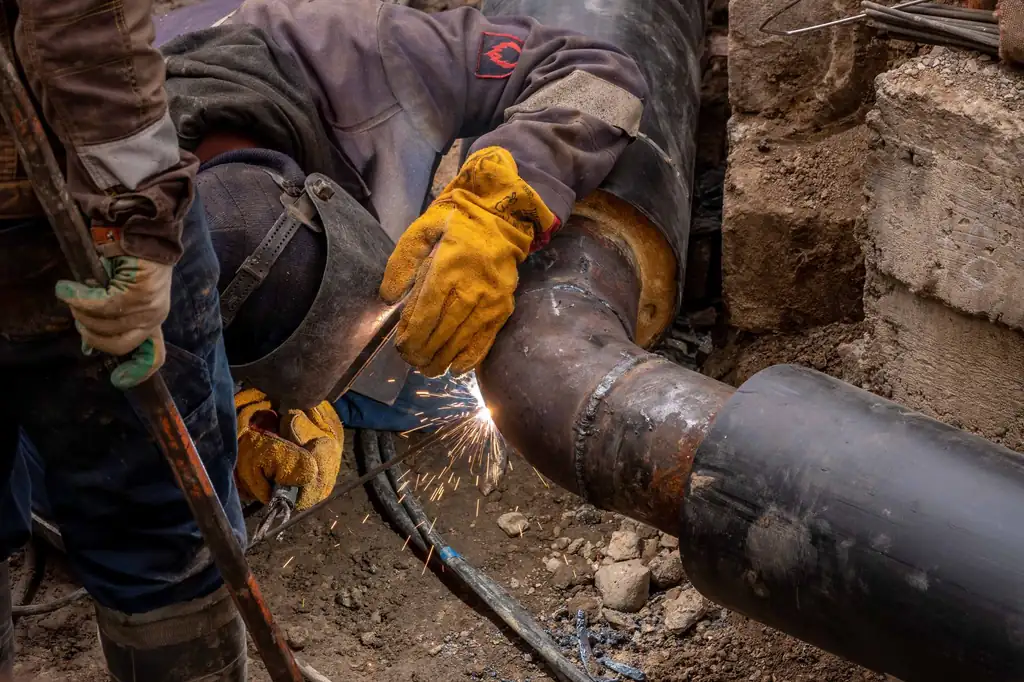
A good liner looks simple from the outside and is exacting on the inside. The resin mix ratio, the inversion pressure, the cure temperature curve, and the timing all have manufacturer specifications, and drifting off any of them produces a liner that wrinkles, delaminates, or cures soft. Qualified CIPP installers train through NASSCO's inspector and installer programs and through the resin and liner manufacturers whose systems they run. In Naples, the craft half matters as much as the chemistry: reading scaled cast iron on camera, knowing how much descaling a 50-year-old pipe needs before it will take a liner, and reopening branch connections cleanly with the robotic cutter without damaging the new epoxy.
Most residential CIPP lining projects in Naples run $8,000 to $17,000-plus, or roughly $60 to $250 per linear foot. That is typical 2026 pricing for the area. Length, diameter, access difficulty, and how much descaling the old pipe needs drive the final number. A camera inspection, typically $189 to $349, measures the exact scope before the lining price is set.
CIPP liners are rated by manufacturers for local experience, and the installed liner is a structural pipe under the ASTM F1216 design standard. Real-world lifespan depends on installation quality: proper descaling, correct resin mix, and a full cure. A liner installed to spec in a Naples home should outlast the homeowner's time in the house.
Yes, this is the ideal use case. The liner installs through the cleanout or a small exterior pit, so the slab is never cut. It works on cast iron that is cracked, joint-separated, or root-invaded but still round. It does not work on fully collapsed pipe or pipe that has lost grade; the camera inspection distinguishes the two before anyone commits.
The liner reduces internal diameter by about a quarter inch on a 4-inch residential line. In practice, flow improves because cured epoxy is far smoother than old scaled cast iron or clay. The Manning flow coefficient of a new liner is better enough that the slight diameter loss is more than offset.
Not seeing your question? Our local team can help you understand urgency, scheduling and what to expect.
Ask the local teamWhen the camera shows a pipe that lining cannot save, collapsed or with lost grade, full replacement by pipe bursting or excavation is the durable answer. Both options are priced from the same inspection footage.
View service
The no-dig family that includes CIPP lining and pipe bursting. Lining is the rehabilitation half of trenchless work: it restores the existing pipe, while bursting replaces it.
View service
This page. Epoxy lining that builds a seamless, jointless pipe inside the old one, installed in a day through a small access point, with a manufacturer-rated 50-year design life.
View serviceThe trenchless alternative when lining is ruled out. Bursting fractures the old pipe outward and pulls new HDPE through, which handles collapses and grade problems that lining cannot.
View service
Ready when you are. Call (239) 448-0271 weekdays between 8am and 6pm and you will reach someone who can schedule a camera inspection or talk through what your drains are doing. For emergencies, describe the backup or odor and we will tell you what to do right now. Our office sits at 1274 13th St N in Naples, and we run service calls across Collier County daily.