What Causes Sewer Backups in Naples, FL?
Roots, cast-iron scale, bellies, rain-season saturation, grease, and wipes: the six causes behind most Naples sewer backups, and how to prevent each one.
Sewer backups in Naples are most often caused by tree roots invading the line, cast-iron scale catching debris, bellies holding standing water, rain-season soil saturation shifting joints, and grease or wipes building up inside. Backups rarely come out of nowhere: the line usually sends months of warnings in the form of slow drains and gurgling first. This guide covers each cause, what it looks like, and how to prevent the next one.
A sewer backup is wastewater flowing back into your home through drains, toilets, or tubs, and in Naples it is usually the final symptom of a line that has been struggling for months. Understanding which cause is behind yours matters, because a root problem and a grease problem get fixed very differently.
What causes sewer backups in Naples, FL?
Six causes account for nearly every backup we see in Collier County. They often stack: an older line has scale, roots find the scale, and rain season finishes the job.
- Tree roots: roots enter through tiny cracks and joints, then grow into a mass that traps everything. The leading cause in Naples yards.
- Cast-iron scale: rust inside old iron pipes forms a rough surface that snags paper and solids until flow chokes off.
- Bellies: low spots where the pipe sags hold standing water and sediment instead of draining.
- Rain-season saturation: from roughly June through November, saturated soil shifts pipes and separates joints.
- Grease: cooking grease poured down the kitchen sink cools, hardens, and narrows the pipe from the inside.
- Wipes and non-flushables: so-called flushable wipes, paper towels, and hygiene products do not break down and snag on every rough spot.
Tree roots: the leading cause in Naples yards
Roots do not break into healthy pipe. They find existing openings, hairline cracks, loose joints, tiny separations, and slip hair-thin feeder roots inside. Once inside, the root finds water and nutrients and grows. A feeder root becomes a root mass, and the root mass becomes a net that catches paper, grease, and solids. The first symptom is usually a toilet that needs two flushes. The last symptom is sewage in the tub.
Tropical landscaping makes Naples especially prone. Fast-growing trees like ficus, areca palms, and mango put out aggressive root systems that travel surprising distances toward moisture. A tree planted 20 feet from the line when the house was built can be sitting on top of it thirty years later. In heavily landscaped areas, calls for sewer line repair in Bonita Springs often trace back to exactly this: a beautiful mature tree and a sewer line that never stood a chance.
Roots are also a repeat offender. Cutting them with a snake clears the blockage, but the root ends left inside the pipe grow back thicker, like a pruned hedge. Homeowners who snake every six months are on a treadmill. The exits from the treadmill are lining the pipe, which seals every entry point, or replacing the damaged section.
Cast-iron scale and bellies: the structural causes
Most pre-1972 Naples homes have cast-iron sewer lines, and cast iron fails in a particular way. It rusts from the bottom up, and the rust does not form a smooth surface. It forms scale: rough, flaky, serrated buildup that narrows the pipe and gives every passing solid something to catch on. A scaled line can look fine from the cleanout and still be choked to half its diameter inside.
Scale also hides the real condition of the pipe. A camera inspection shows the difference between a line that is merely scaled, which jetting can clean, and a line that is scaled and cracked through, which needs repair. Guessing between those two from symptoms alone is how homeowners pay for three cleanings before paying for the fix.
A belly is a different structural problem. It is a low spot where the pipe has sagged, often because the soil beneath it settled or washed away. Water and solids pool in the belly instead of flowing out, and the pooled waste accelerates corrosion at that spot. Bellies are common under driveways and in areas with sandy, shifting soil. No amount of cleaning fixes a belly: the geometry is the problem, and only repair or replacement changes geometry.
Rain season: why backups spike from June to November
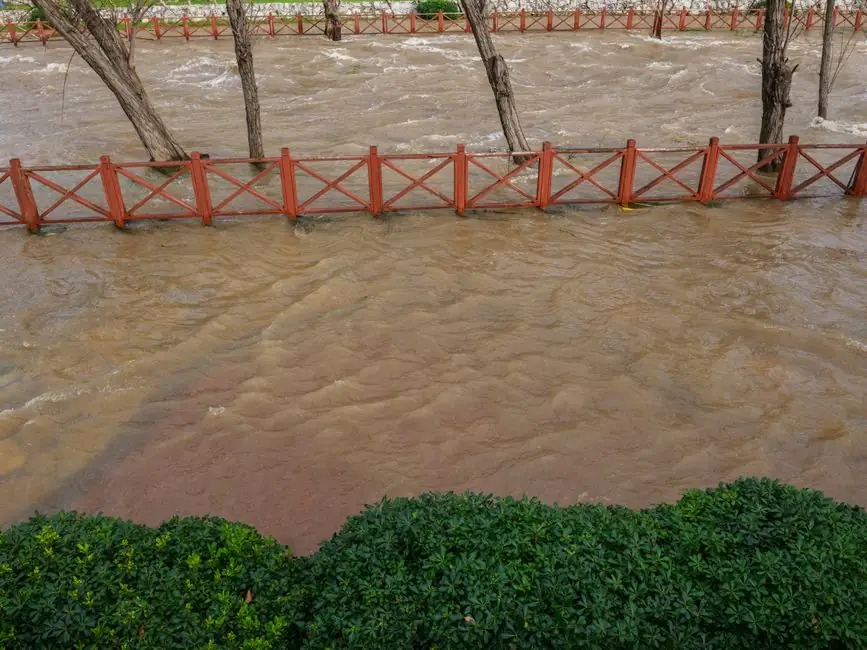
Ask any Naples plumber when the phone rings most, and the answer is rain season. Saturated soil is heavier than dry soil, and heavy soil moves. It presses on pipes, shifts bedding, and pulls at joints that were already weakened by corrosion. A joint that held through the dry months separates after a few weeks of daily downpours, and the first heavy storm after a dry spell is the classic trigger.
Groundwater infiltration makes it worse. Cracked pipes below the water table take on groundwater during rain season, and that extra water can overwhelm a line that was already draining slowly. The result is the maddening pattern homeowners describe: everything works fine all winter, then the first big summer storm brings sewage into the shower.
On barrier islands and low-lying areas, the water table sits high even in the dry months. Where sewer line repair in Marco Island is common, we see infiltration-driven backups more often, because the pipe spends more of the year partially submerged. If your backups follow the rain calendar, say so when you call: it tells the technician where to look.
Common mistakes that turn a slow drain into a backup
The number one mistake is pouring grease down the kitchen sink. Hot grease looks harmless going down. It cools within feet, coats the pipe wall, and hardens into a waxy layer that narrows the line a little more with every pan. Wipe pans with a paper towel and throw it in the trash. It is the cheapest sewer maintenance there is.
The second is flushing wipes. Packaging that says flushable means it will go down your toilet, not that it will survive your sewer line. Wipes do not disintegrate like toilet paper. They snag on cast-iron scale and root masses and felt themselves into blockages that a plunger cannot touch. Only toilet paper and human waste belong in the toilet.
The third is treating a slow drain as a fixture problem for too long. When several fixtures slow down together, the restriction is in the main line, and every week of delay lets the blockage grow. A Hydro Jetting in Naples service scours the line with high-pressure water, clearing roots, grease, and scale in a way a snake cannot. Used as maintenance on a line with known buildup, it prevents the backup instead of reacting to it.
The fourth is planting without checking where the line runs. Before any new tree goes in, know where your sewer lateral is. Keep thirsty, fast-growing species well away from it, and consider a root barrier, a buried panel that deflects roots downward, between new plantings and the pipe.
When to call a professional
Call immediately if sewage is backing up into the home. Sewage is a health hazard, and the damage spreads with every hour. Stop using water, keep people and pets away from affected areas, and call for help. That situation is Emergency Sewer Repair in Naples territory, not a wait-until-morning situation.
Call soon, within days, if several drains are slow at once, if toilets gurgle when other fixtures drain, or if backups keep returning after cleaning. Those are main-line symptoms, and a camera inspection, typically $189 to $349, will show whether you are dealing with roots, scale, a belly, or a combination. Trenchless Sewer Pros diagnoses from the footage and fixes the cause, not just the symptom.
Frequently Asked Questions
Why does my sewer back up every time it rains?
Rain saturates the soil, which shifts pipes, separates weak joints, and lets groundwater infiltrate cracks. A line that drains slowly in dry weather can back up completely after heavy rain. If the pattern repeats, the line needs inspection, not patience.
Are flushable wipes really a problem?
Yes. They do not break down like toilet paper. Wipes snag on cast-iron scale and root masses and build into blockages. Plumbers pull them out of Naples lines constantly. Only toilet paper and human waste should go down the toilet.
Can I prevent tree roots from getting into my sewer line?
You can reduce the risk. Do not plant thirsty trees over the pipe run, install root barriers between trees and the line, and have the line jetted periodically if roots have been a problem. A lined pipe also seals every root entry point.
How fast should I act on a sewer backup?
Immediately if sewage is involved. Sewage is a health hazard, and every hour lets it spread further into flooring and drywall. Stop using water, call for emergency service, and keep people and pets away from affected areas.
Will hydro jetting fix my recurring backups?
It clears the blockage but not always the cause. Jetting removes roots, grease, and scale buildup, which buys time. If the camera shows a collapsed section or a severe belly, the backup will return until the pipe itself is repaired.
Get help with sewer line repair in Naples
Backups do not fix themselves, and the cause only gets more expensive with time. Call Trenchless Sewer Pros at (239) 448-0271 for a camera inspection that finds the real cause and a repair plan that ends the cycle.